Mobile walls
Fixed walls
Wall claddings
Walls are more than just a structural element dividing space into separate rooms – and they are certainly more than just a blank background surface. They define the look of an interior, influence how it feels, and even shape its acoustic comfort. That’s why traditional finishes like paint, wallpaper, or textured plaster are increasingly giving way to modern solutions such as decorative wall cladding.
Manufactured on the basis of MDF boards, these claddings provide a practical and aesthetically pleasing finish designed to last for years.
Wall cladding is a decorative wall finish installed inside interior spaces. MDF boards used for wall claddings are made by pressing wood fibres with resins under high pressure and temperature, resulting in a smooth and uniform material. These boards can then be milled, painted, veneered, laminated, or finished in many other ways, offering a wide range of properties and virtually unlimited design possibilities.
Our cladding systems are installed using dedicated fixing solutions, allowing for quick and secure installation on the wall surface. This type of finish effectively masks all wall irregularities, wiring and other elements you’d prefer to keep out of sight. MDF-based panels not only improve room acoustics, but are also highly resistant to mechanical damage and withstand everyday wear and tear.
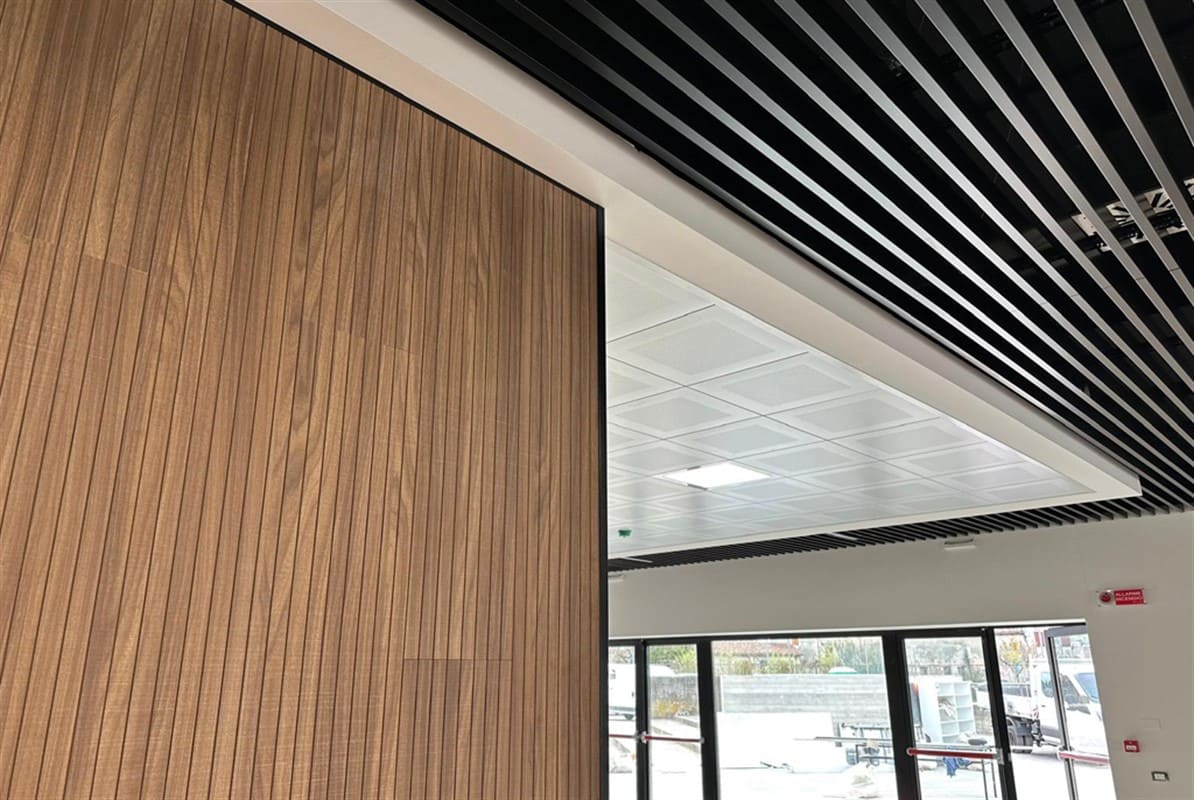
When it comes to MDF-based wall cladding, you can choose from solid panels, perforated panels, micro-perforated panels, milled panels, and fluted panels. Each of these types serves a different purpose – from purely decorative to highly functional.
Solid cladding delivers a minimalist look and a smooth, easy-to-clean surface.
Perforated and micro-perforated panels are designed to maximise acoustic performance, making them ideal for conference halls, auditoriums, libraries, museums, and other, similar spaces.
Milled and fluted panels add a three-dimensional texture that draws the eye and provides the interior with a dynamic feel.
Naturally, the final visual effect depends on the colour and surface finish of the boards. Options range from light tones such as Oak Rock White or Tafira Elm, through rich wooden colours like Bavarian Beech or Walnut, all the way to dark, elegant shades like Athena Walnut.
Popular MDF panel finishes include solutions such as:
Melamine – A thin layer of decorative paper impregnated with resin and hardened under heat. The result is a smooth surface that is scratch-resistant, easy to clean, and durable enough for medium-traffic areas like offices, schools, or technical rooms. What sets it apart is the wide palette of colours and patterns, from solid tones to realistic reproductions of materials such as wood.
CPL (Continuous Pressure Laminate) – A durable finishing made by layering decorative paper impregnated with melamine resins under continuous pressure. CPL is thicker and more abrasion-resistant than melamine yet it retains high aesthetic quality. It is perfect for high-traffic interiors such as corridors, waiting areas, or changing rooms.
HPL (High Pressure Laminate) – Produced by pressing multiple layers of kraft paper and decorative paper at very high temperature and pressure. The result is an exceptionally hard, durable surface with outstanding resistance to mechanical damage, moisture, chemicals, and UV rays. HPL is suitable for environments exposed to heavy use, such as airports, shopping malls, hotels, and industrial facilities.
Natural Veneer – A thin slice of natural wood mounted on an MDF surface. Every veneer sheet has a unique growth ring pattern and colour, giving interiors an authentic, premium look. Natural veneer is frequently used in prestigious spaces such as conference rooms, receptions, hotel suites, and executive offices.
Reconstituted (Engineered) Veneer – Made from real wood like natural veneer but enhanced through technical processing – dyed, pressed, and sliced into consistent patterns. This offers a uniform growth ring pattern as well as colouring, which is often difficult to achieve with natural veneer. Engineered veneer is a popular choice for large-scale projects where visual consistency across hundreds of panels is key.
By combining different panel types, colours, textures, and finishes, you can create the perfect wall cladding solution – one that delivers exactly the look and performance your space requires.
Commercial interior designers are increasingly turning to wall cladding as a way to achieve bold yet elegant and cohesive design concepts. Three-dimensional fluted and milled panels are gaining popularity, adding depth and dynamic feel to walls – particularly in minimalist office or hotel spaces.
Dark finishes paired with integrated LED lighting are also trending, creating an atmosphere of sophistication and modernity that is especially appreciated in the hospitality sector. In contrast, light-toned panels dominate in offices, coworking hubs, and educational spaces, where bright interiors boost energy and enhance comfort at work.
A creative option is to combine different textures and colours of wall cladding to produce unique compositions. Veneered cladding is also in high demand. They provide a warm, organic character to interiors which is similar to that of natural wood finishes.
Thanks to the flexibility in form, colour, and surface finish, MDF wall cladding fits perfectly into contemporary interior design – seamlessly blending aesthetics, ergonomics, and long-lasting durability.

Wall cladding is both a practical and striking wall finish, making it a perfect choice for a wide range of commercial interiors where aesthetics and functionality go hand in hand.
In open space offices, as well as conference and exhibition halls, cladding is valued for its acoustic properties and its ability to create a pleasant, modern working environment. In educational facilities – from schools to universities – as well as in warehouses and production halls, it is chosen for its exceptional durability and ease of maintenance.
In turn, premium finishes such as natural wood veneer bring a refined, prestigious look that elevates the interiors of hotels, restaurants, and cultural venues.
With such a wide selection of styles and finishes, MDF wall cladding can enhance virtually any commercial space, offering an attractive, long-lasting design solution.
With so many interior finishing options available, you can achieve almost any look you want. So why choose wall cladding over traditional methods like paint, wallpaper, or textured plaster? Wall cladding offers durability that lasts. Cladding is far more resistant to scratches, impacts, and everyday wear than most conventional finishes, making it ideal for high-traffic spaces such as offices, corridors, hotel rooms, and conference halls. Unlike paint or wallpaper, wall cladding can hide uneven surfaces, electrical wiring, and other imperfections, reducing the need for costly, time-consuming preparation works. Additionally, MDF panels, especially in perforated designs, offer better sound absorption and superior acoustics than traditional wall finishes, improving comfort in workplaces and public areas.
Wall claddings offer a huge variety of textures, colours, and finishes which allows you to create anything from sleek minimalism to subtle elegance or warm, natural interiors – effects that are hard to replicate with paint or plaster. Last but not least, wall cladding can be installed quickly and with minimal disruption, avoiding long downtime for commercial spaces.

While the initial cost of purchasing and installing MDF wall cladding may be higher than traditional finishes like paint, wallpaper, or plaster, it is a far more cost-effective choice in the long run.
Cladding offers superior durability and resistance to mechanical damage, dirt, and abrasion, which means lower maintenance costs and less frequent refurbishments. Paint can fade and chip, wallpaper may peel or scuff, and plaster can crack – all of which lead to more frequent and expensive repairs.
In contrast, wall cladding maintains its original appearance for many years, with upkeep usually limited to an occasional wipe with a damp cloth. The ability to hide wiring and wall imperfections also eliminates the need for costly preparatory work before installation.
For large commercial spaces, this translates into substantial savings – both financial and time-related – while at the same time enhancing the prestige and finish quality of the interior.


