Mobile walls
Fixed walls
Wall claddings
In offices, especially in large, open-plan spaces, excessive noise can be a problem for both employees and visitors. To combat this, more and more companies are turning to modern solutions such as installing soundproof walls, structural elements that reduce noise levels and improve working comfort.
Do you have an office and want to create an aesthetically pleasing space while providing yourself and your team with the right conditions for focus? Do your employees only occasionally need private offices or conference rooms for uninterrupted phone or face-to-face conversations? Take a closer look at solutions such as mobile walls and fixed acoustic partitions.
Office noise can have a negative impact on employees’ well-being and productivity. Loud phone calls, the hum of printers and conversations between colleagues all contribute to distraction, reducing concentration and work efficiency. Prolonged exposure to high noise levels can also lead to stress, fatigue, and burnout.
This is why many companies are moving away from the open space layout—once thought to cut costs and encourage creativity. Studies now show that office noise is one of the main causes of reduced employee productivity. This problem is especially evident in open-plan offices, where there are no solid walls separating workstations. That’s why it’s so important to incorporate effective acoustic solutions during office design to reduce noise and improve comfort.
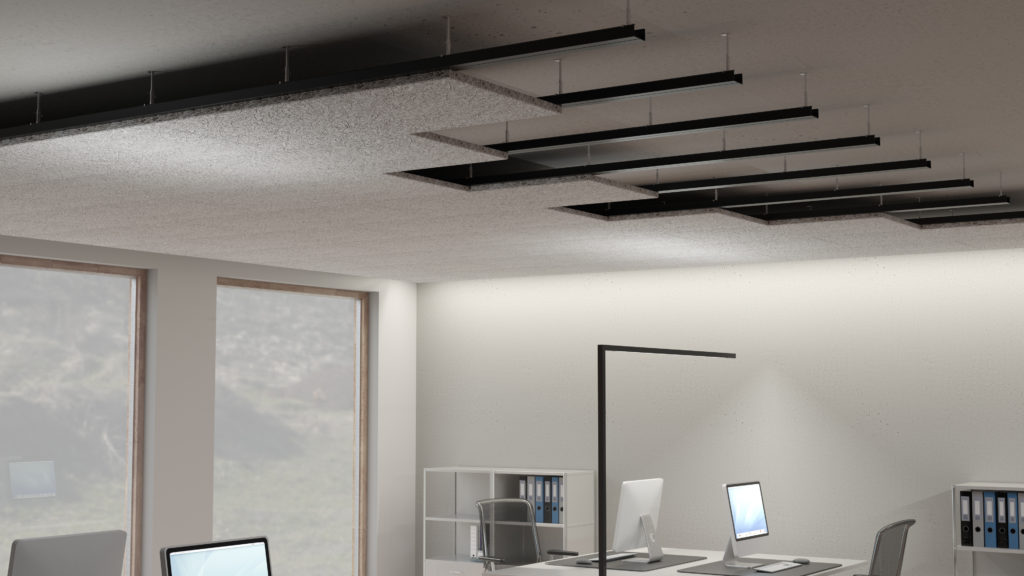
In Poland, as in many other countries, there are regulations defining the permissible noise levels in offices to protect employee health. By law, the maximum allowable noise level in an office is 55 decibels during the day and 45 decibels at night.
Acoustic standards also include requirements for the sound insulation of partition walls. This means that even when using modern solutions such as acoustic partitions, it’s important to verify that they have the appropriate certifications confirming compliance with all regulations.
Designing a modern, inspiring, and functional office requires consideration of many factors. An office must be practical yet comfortable to work in. Ideally, it should be spacious, with well-organized workstations, efficient space management, and good acoustic design.
In terms of acoustics, this means using sound-absorbing materials to reduce noise levels. The layout should also include rest and relaxation areas that support recovery and focus. Resting in a quiet environment directly boosts employee productivity, which is why it’s worth investing in a dedicated chill-out room. If that is not possible, there should be a quiet zone in every office.
A poorly designed office with inadequate acoustic materials can become a noise-filled space that lowers employee comfort and productivity. This is particularly problematic as there are professions that require deep focus. Translators, lawyers, business analysts, or designers, to name but a few, are people who value peace and minimal external distractions.
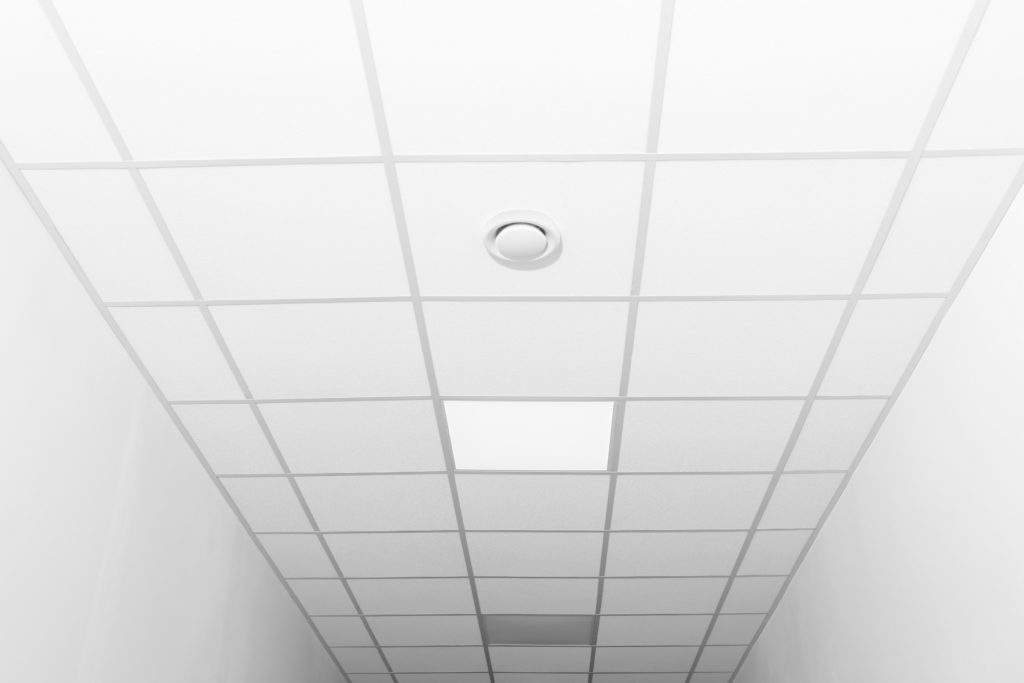
Noise reduction can be achieved through various techniques using sound-absorbing materials and design solutions.
Effective soundproofing methods include:
Thanks to these solutions, it is possible to create an office space that fosters focus, work efficiency, and employee comfort. While these solutions work well, one of the most effective options is soundproof walls. Their unique construction provides high levels of sound insulation while preserving interior aesthetics and privacy.
They’re ideal for busy offices with limited space, allowing for the creation of quiet zones within open-plan layouts. Mobile acoustic wall systems offer quick adaptation to changing needs while adding a modern, elegant look to the office.
The construction of office acoustic walls relies on materials that effectively block noise while maintaining privacy. Their production involves materials that differ in acoustic insulation performance, aesthetics, and longevity.
Often used in modern offices. While glass itself is not a sound absorbing material, special acoustic glass variants feature additional layers to improve sound insulation. Such partitions can be visually appealing, let light through, and make spaces feel larger, though they require precise installation.
Another excellent solution is fixed aluminium-glass walls. These systems combine durable aluminium frames with acoustic properties of glass. By using special glass panels with enhanced soundproofing qualities they reduce noise while still allowing natural light to penetrate the interior. These systems are often used in spacious offices where, in addition to acoustic insulation, maintaining an open-space feel is a priority.
Partitions made of wood are a good choice for offices that value a natural and warm appearance. Wood has good sound-absorbing properties and fits perfectly into both modern offices and those finished in industrial or Scandinavian styles. However, its drawbacks include susceptibility to moisture and temperature changes, as well as the need for regular maintenance.
combined with sound-absorbing materials, they offer good acoustic insulation, as well as ease of installation and a relatively low cost. They work well in offices where noise reduction is needed while maintaining spatial flexibility. Their drawback may be a relatively low resistance to mechanical damage.
These are specialized materials used to improve acoustics in offices, especially in spaces where noise is particularly troublesome. They are made from materials such as acoustic foam, mineral wool, or felt. These materials are excellent at absorbing sound and can be installed either permanently or as mobile elements. Their drawback is that, over time, they lose their acoustic effectiveness if they become excessively soiled.
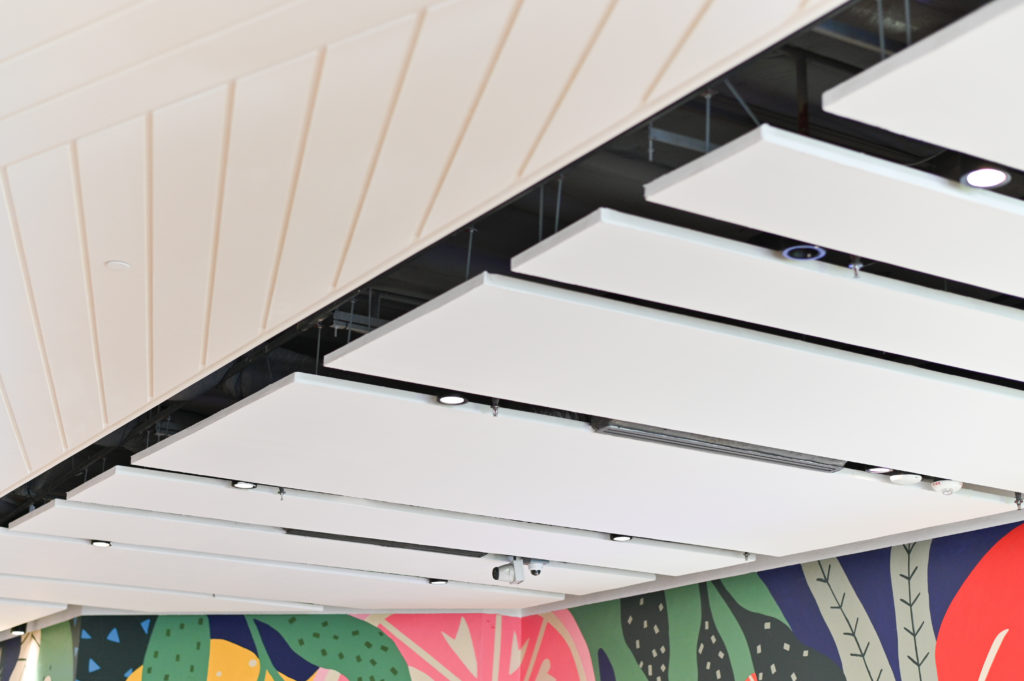
Mobile acoustic walls are an innovative solution that allows quick and easy reconfiguration of office space to meet current needs. Offices can be flexible and remain open-plan most of the time but be divided into smaller work areas or meeting rooms when necessary. In short—they make it easy to adapt layouts instantly.
Beyond sound reduction, acoustic walls also enhance the visual appeal of an office. In offices, great importance is placed on interior design, and a well-planned layout fosters creativity, concentration, employee well-being, and positively influences how clients perceive the company. Sound-absorbing partitions can enhance the aesthetic value of office spaces. The ability to choose from various materials and colors makes it possible to match partitions to minimalist, industrial, or even classic office styles where natural materials dominate. They can even serve as decorative elements. Most importantly, they create distinct zones while maintaining stylistic consistency and an elegant appearance. With glass and aluminum partitions, you can achieve a sense of spaciousness and allow natural light to flow through the space.
Thus, a well-chosen partition not only improves working conditions but also achieves an optimal balance between functionality and design.


